

Introduction
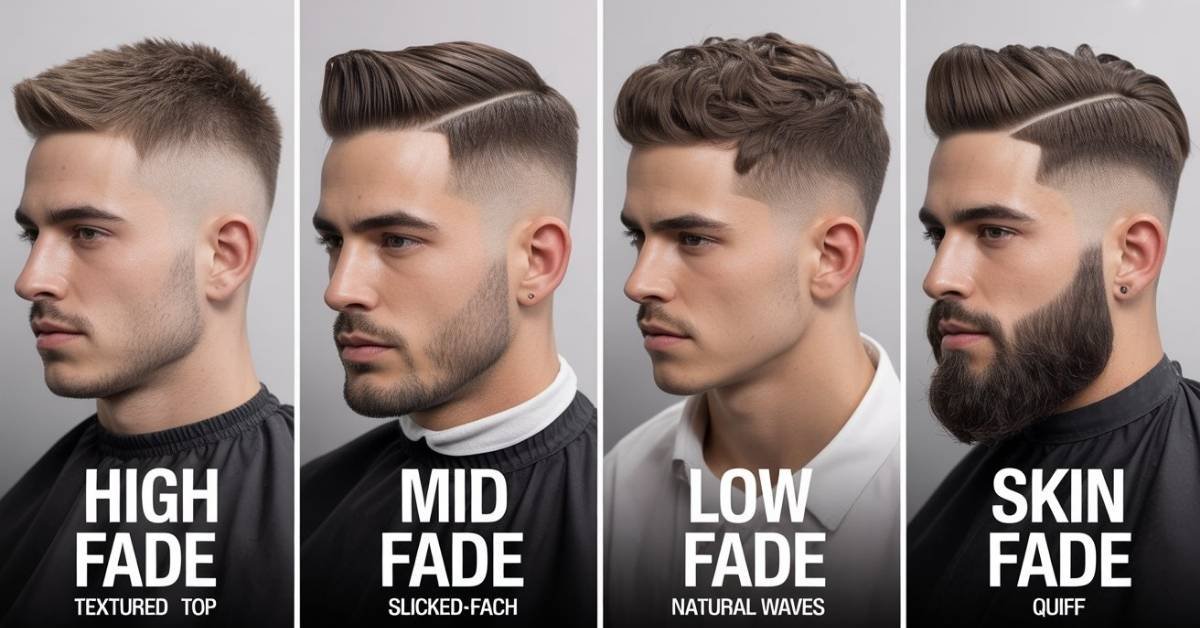
When it comes to men’s hairstyles, few cuts are as versatile, stylish, and modern as fade haircuts. Whether you’re looking for a low-maintenance look or a bold style statement, types of fade haircuts offer something for everyone. Fade haircuts not only highlight the hair on top but also provide clean, sharp lines that enhance facial features.
Additionally, fade haircuts are perfect for men of all ages and hair types. From straight to curly hair and short to long lengths, a fade can completely transform your appearance. In fact, their popularity among barbers and men alike shows no signs of slowing down, especially in 2025, when trendy and modern fade styles are expected to dominate salons worldwide.
What Is a Fade Haircut?
A fade haircut is a style where the hair gradually tapers from longer lengths at the top to shorter lengths at the sides and back. This gradient creates a smooth, blended effect that looks polished and professional. Unlike simple buzz cuts or undercuts, fade haircuts give a structured appearance while remaining highly customisable.
Moreover, fade haircuts can be combined with other styles such as a pompadour, quiff, or crew cut. This adaptability is why men’s fade haircut styles remain a staple in barber shops globally. Whether you prefer a subtle look or a high-contrast design, a fade can be tailored to suit your personal taste and lifestyle.
Origin of the Fade Haircut
The fade haircut has a rich history that traces back to the early 20th century, originally popularised among military personnel. Soldiers favoured the clean, low-maintenance style that was practical yet sharp. Over time, the fade evolved into a cultural icon, embraced by barbers and urban communities for its stylish edge.
In the 1980s and 1990s, barbers in urban areas innovated on the original fade, creating popular barber fade styles like the high-top fade and razor fade haircut. Today, modern fade haircuts continue to push boundaries with creative designs and blended techniques that appeal to men seeking both style and sophistication.
Types of Fade Haircuts
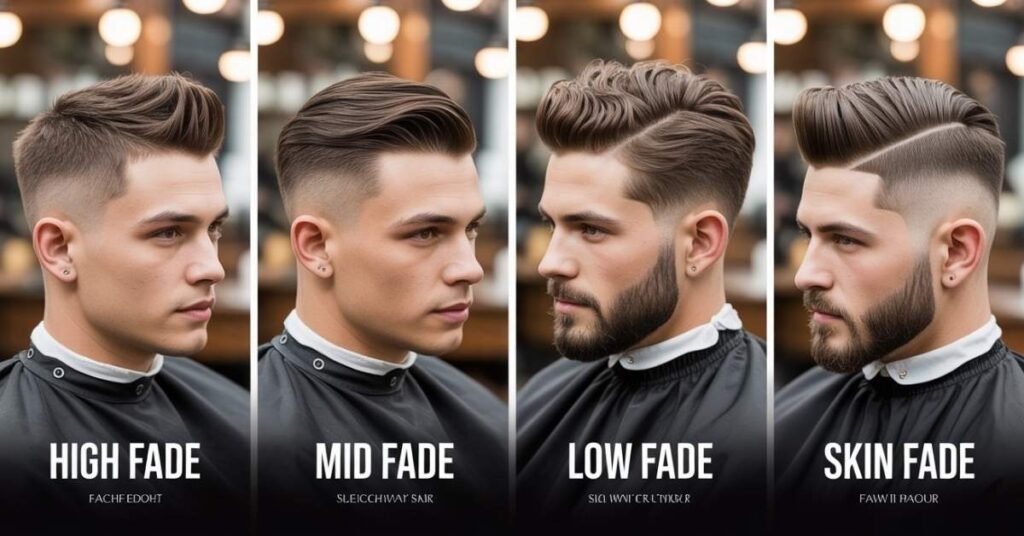
When it comes to types of fade haircuts, variety is everything. The most common fade types include low fade, mid fade, high fade, skin fade, bald fade, and shadow fade. Each offers a unique look and can be tailored to your face shape, hair type, and personal style.
- Low Fade: Tapers gently from the temples down to the ears. Ideal for subtle, professional looks.
- Mid Fade: Falls between the low and high fade, providing a balanced, trendy appearance.
- High Fade: A dramatic taper starting near the top of the head, perfect for bold statements.
- Skin Fade: Shortens hair down to the skin for a crisp, clean edge.
- Bald Fade: Similar to a skin fade but with a smoother transition from top to shaved sides.
- Shadow Fade: Maintains a hint of hair at the shortest section, offering depth without harsh lines.
Additionally, modern variations like the drop fade, burst fade, and temple fade add artistic flair, making fade haircuts versatile for men seeking both traditional and contemporary styles.
Fade Haircut Levels: Low, Mid & High
Understanding fade levels helps you communicate with your barber and achieve the look you want. Low fades start just above the ears, maintaining a longer top for versatility. Mid fades fall slightly higher, creating a balanced blend between sides and top. High fades are dramatic and begin near the crown, ideal for modern, edgy styles.
Moreover, fade levels can be combined with other variations like skin, shadow, or bald fades. For instance, a high skin fade gives a sleek, bold look, while a low shadow fade creates a softer, more natural gradient. Choosing the right level depends on your face shape, hair density, and personal style goals.
Skin, Shadow & Bald Fade Variations
Skin, shadow, and bald fades are the most technical fade types.
- Skin Fade: Hair tapers down to bare skin for maximum contrast. Perfect for a sharp, clean look.
- Shadow Fade: Hair tapers close to the skin but leaves a slight shadow, providing depth and texture.
- Bald Fade: Creates a completely shaved side while maintaining length on top for a bold statement.
Barbers often use a combination of clippers and scissors to achieve precise fade lines. These fade variations are particularly effective for highlighting textured hair or pairing with designs, line-ups, and other styling elements.
Modern Variations of Fades (Drop, Burst, Temple, etc.)
Fade haircuts continue to evolve with modern barber techniques. Popular variations include:
- Drop Fade: Follows the curve of the head, dipping lower at the back for a unique shape.
- Burst Fade: Fades around the ear in a circular pattern, often paired with mohawks or fauxhawks.
- Temple Fade: Fades around the temples for a sharp, clean look.
- Buzz Cut Fade & High Top Fade: Offers edgy styles with minimal top length.
These modern fade haircut ideas allow men to express individuality while keeping the fade sharp and stylish. Alongside classic fades, they remain top choices for 2025 trends.
Most Popular Fade Styles in 2025
The barbering world is buzzing with new trends. Popular fade haircuts for 2025 include the blended fade haircut, razor fade haircut, and fade with hard part. Trendy fade haircut styles also include the V-shaped fade haircut, messy textured fade, and fades paired with pompadours or quiffs.
Additionally, barber-recommended fades like the undercut fade style and fade with disconnected undercut are gaining popularity for their bold, defined looks. These styles show that fade haircuts are not just a haircut; they’re a fashion statement.
Which Fade Haircut Is Best?
Choosing the best types of fade haircuts depends on your face shape, hair type, and personal style. For example, a high skin fade may suit men with angular features, while a low shadow fade complements softer, rounder faces. Popular fade haircuts, such as the classic fade haircut or modern fade haircut, can be adapted to suit both professional and casual settings.
Moreover, your barber’s expertise is key. Professional fade haircut styles often include precise blending, clean fade lines, and attention to symmetry, ensuring the cut looks polished from every angle.
How to Choose the Right Fade (Face Shape + Hair Type)
Face shape plays a major role in selecting a fade.
- Round Face: High fade or angular styles elongate the face.
- Square Face: A mid fade with a textured top balances strong jawlines.
- Oval Face: Most fade types work; experiment with style variations.
- Diamond/Heart-Shaped Face: Low fades complement narrow jawlines and highlight cheekbones.
Hair type is equally important. Curly fade haircuts maintain volume on top, while straight or wavy hair works well with clean fade lines and sharper designs. Choosing a fade haircut that complements your natural hair texture ensures a polished, effortless look.
Best Fade Haircuts for Different Face Shapes
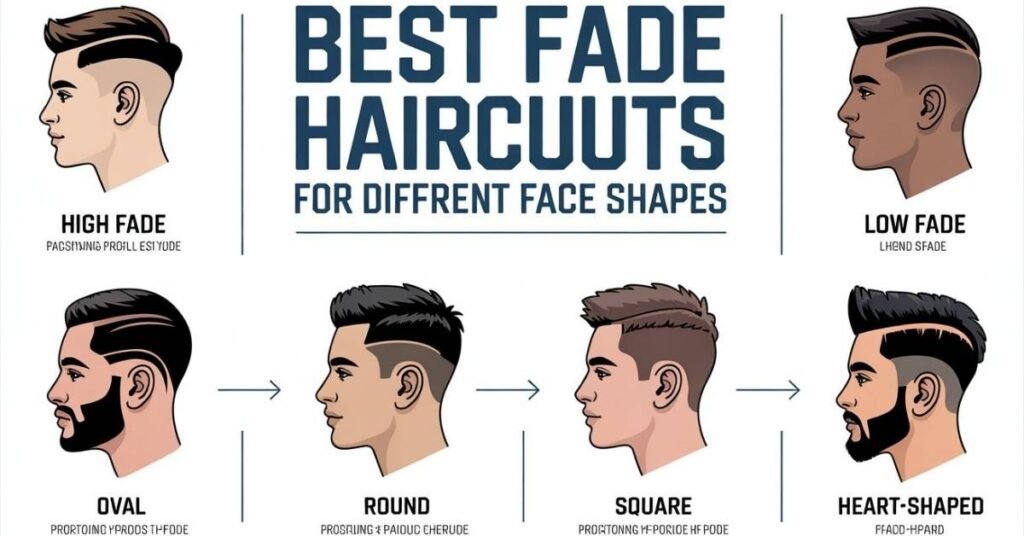
Some fade haircuts are universally flattering, while others are tailored to specific face shapes:
- Round faces: High taper fade or curly fade haircut for men
- Square faces: Mid bald fade or sharp skin fade
- Oval faces: low shadow fade or classic barber fade
- Diamond faces: Drop fade or burst taper fade
Barbers often recommend experimenting with blended fade techniques to find the perfect style that suits your facial features.
Fade Haircut Styles for Straight, Wavy & Curly Hair
Hair texture significantly affects the fade’s final look.
- Straight Hair: Clean fade haircut with scissor-over-comb fade for sharp lines.
- Wavy Hair: A wavy fade haircut for men with a mid or low fade enhances natural movement.
- Curly Hair: The curly fade haircut for men keeps volume on top while fading the sides seamlessly.
Choosing the right fade style for your hair type helps maintain a polished appearance and reduces daily maintenance.
Asian Fade Haircuts: Popular Types & Styles
Asian fade haircuts are increasingly popular due to their versatility and sharp appearance. Popular fade styles for Asian men include skin fades, mid fades, and high fades, often paired with textured tops or pompadours.
Moreover, barber-recommended fades for Asian hair focus on blending thick or coarse hair efficiently while maintaining a clean, modern silhouette. Styles like the buzz cut, fade, or fade with side part are particularly popular in urban barber shops.
Fade Haircut Types for Short, Medium & Long Hair
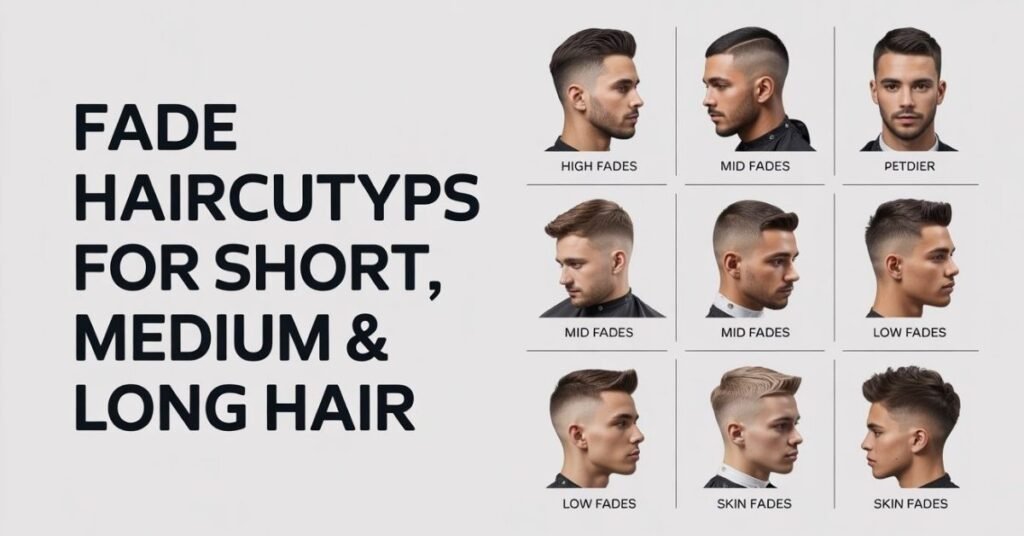
Fades can be adapted for any hair length:
- Short Hair: Low fade, skin fade, or buzz cut fade
- Medium Hair: Mid fade, shadow fade, or classic fade haircut
- Long Hair: High fade, drop fade, or fade with pompadour
Additionally, the fade can be combined with undercut or textured top styles to enhance contrast and showcase the haircut’s gradient effect.
Popular Hairstyles That Pair With a Fade
Fade haircuts are versatile and pair well with many styles:
- Quiff: fade with quiff
- Pompadour: fade with pompadour
- Crew Cut: fade with crew cut
- Undercut: fade with undercut
- Afro: fade with afro
- Curly top: fade with curly top
- Fringe: fade with fringe
These combinations allow you to personalise your look while keeping your fade sharp and stylish.
How to Ask Your Barber for a Fade Haircut Type
When visiting your barber, communication is key. Bring photos, mention the fade type (e.g., mid bald fade, drop fade), and specify your preferred length and blending technique. Professional men’s fade haircuts require clear instructions to achieve precise fade lines and overall symmetry.
Additionally, discussing hair texture, face shape, and maintenance preferences ensures the fade suits your lifestyle.
Fade Haircut Steps (How It’s Done)
Barbers typically follow these steps for a perfect fade haircut:
- Start with clean, dry hair.
- Decide on fade level: low, mid, or high.
- Use clippers for the primary fade, following the head shape.
- Blend with scissors or the clippers-over-comb technique.
- Refine edges using the line-up fade haircut method.
- Style the top hair with the desired finish.
Alongside precision, fade haircut steps ensure even blending and sharp lines.
Why Fade Haircuts Are So Popular
Fade haircuts remain a favourite due to their versatility, clean look, and modern appeal. Low-maintenance fades are ideal for busy schedules, while high fades make a bold fashion statement. Moreover, the ability to pair fades with other styles like pompadours, quiffs, or buzz cuts keeps the look fresh and contemporary.
Barbers’ Most Requested Fade Haircut Types
Some fade haircuts consistently top the request list:
- Classic fade haircut
- Razor fade haircut
- Drop fade and burst fade
- Fade with disconnected undercut
- High skin taper fade
- Shadow taper fade
These barber-recommended fades combine style, practicality, and adaptability for men of all ages.
The Evolution of Fade Haircut Types Over the Years
Fade haircuts have evolved from military-inspired, low-maintenance cuts to highly creative barber styles. Modern barber fades now include intricate designs, line-ups, and blended techniques that showcase skill and artistry. Consequently, fades continue to redefine men’s hairstyles, maintaining relevance in both classic and trendy forms.
Fade Maintenance Tips
Keeping a fade sharp requires routine care:
- Regular trims every 2–3 weeks
- Use fade haircut grooming products for shine and texture
- Daily maintenance at home with combs or trimmers
- Avoid over-washing to preserve hair health
Moreover, proper care ensures the fade maintains its gradient, prevents uneven lines, and enhances overall appearance.
Best Styling Products for Fades
Top products for fade haircuts include:
- Pomades for textured styles
- Hair wax for strong hold
- Styling creams for volume
- Lightweight gels for curly or wavy hair
Using professional fade haircut products helps you keep your style fresh and clean throughout the day.
Conclusion
In conclusion, types of fade haircuts provide unmatched versatility, style, and modern appeal. From low fades to high skin fades, from classic barber fades to modern drop fades, there’s a fade to suit every hair type, face shape, and personal style.
Ultimately, understanding fade variations, face shape compatibility, hair texture, and maintenance ensures you get a fade haircut that not only looks sharp but also reflects your personality. To bring it all together, consult a skilled barber, communicate clearly, and maintain your fade consistently to enjoy one of the most stylish men’s haircuts available today.
FAQs
What types of haircut fades are there?
There are several types of haircut fades, including low, mid, high, taper, skin, drop, burst, and temple fades. Each fade offers a different level of contrast and blends the hair gradually for a clean, modern look.
What is the most popular fade haircut?
The most popular fade haircut is the mid fade, because it offers a balanced, clean look that suits almost every face shape and hairstyle. It blends smoothly and works well with short, medium, and textured tops.
What is a Lil Boosie fade?
A Lil Boosie fade is a sharp, high fade with a very short, even-length top inspired by rapper Boosie BadAzz. It’s known for its clean lines, bold contrast, and neatly edged hairline.
What are the 7 basic haircuts?
The 7 basic haircuts are the blunt cut, layered cut, bob cut, pixie cut, shag cut, crop cut, and fade cut. These core styles are the foundation for most modern haircut variations.
Is a taper or fade better?
A taper is better if you want a natural, low-contrast look with longer sides, while a fade is better if you prefer a sharper, cleaner, and more modern style. The best choice depends on how bold or subtle you want your haircut to look.

H. Awais is an experienced SEO expert specializing in boosting online visibility, improving search rankings, and driving targeted traffic. With a data-driven approach, he helps businesses grow their digital presence and achieve measurable results.